

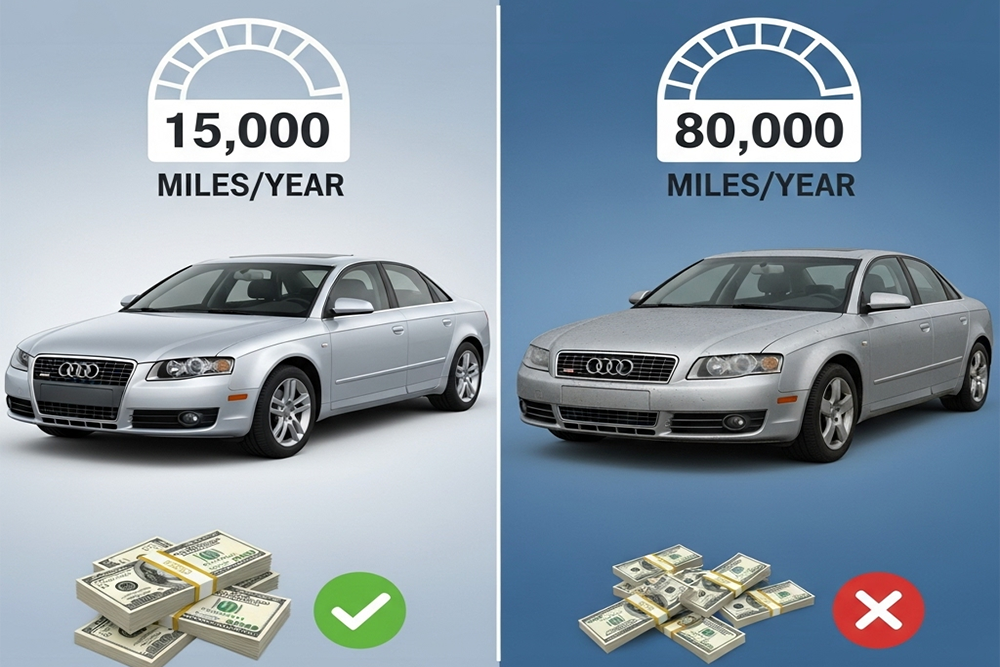
How Annual Mileage Affects Your Audi/VW Loan Options and Value
Owning a car in Waterloo, NY comes with more responsibility than just regular oil changes and tire rotations. One factor many drivers overlook is annual mileage and how strongly it affects both financial value and long-term ownership costs. For Audi and VW owners, mileage plays an even bigger role due to the way lenders, dealerships, and buyers evaluate European vehicles. Every mile you drive slowly shapes your car’s future worth, financing flexibility, and resale potential.
Whether you plan to trade in your vehicle, refinance your loan, or simply protect its value, understanding mileage impact helps you make smarter decisions. Let’s break down how mileage affects trade-in value, loan options, and long-term ownership for Audi and Volkswagen drivers in Waterloo.
Understanding Mileage Impact on Trade-In Value
Mileage is one of the first things dealers check when determining your car’s trade-in value. Alongside age and condition, mileage acts as a shortcut for estimating wear and tear. Higher mileage usually means more use of critical components such as the engine, transmission, suspension, and brakes.
A vehicle with fewer miles suggests less mechanical stress and a longer remaining lifespan. That perception directly increases buyer confidence. On the other hand, high-mileage vehicles often raise concerns about upcoming repairs, even if they’ve been well maintained.
- Audi annual mileage and trade-in value: Audi vehicles are known for premium engineering and performance. Because of this, buyers expect lower mileage when shopping used. An Audi with controlled annual mileage typically commands a noticeably higher trade-in price, especially when paired with documented service history.
- VW trade-in value and loan options: Volkswagen vehicles generally hold value well when mileage is reasonable. Dealers and lenders often offer better loan terms for low-mileage VWs, viewing them as lower-risk investments with longer usable life.
In practical terms, keeping your annual mileage in check can mean thousands of dollars more when it’s time to upgrade. Buyers feel more confident purchasing vehicles that show consistent, moderate usage rather than heavy daily driving.
Why Mileage Matters for Loan Options
Mileage doesn’t only influence resale value—it also affects your loan approval, interest rate, and financing terms. Lenders evaluate mileage to estimate how long the vehicle will remain reliable throughout the loan period.
High-mileage cars are often seen as higher risk because repairs become more likely as mileage climbs. This risk can result in higher interest rates or shorter loan terms, especially for European vehicles that require precise maintenance.
- Loan interest rates: Vehicles with lower mileage often qualify for lower interest rates. Lenders believe these cars will remain dependable for the duration of the loan.
- Loan terms: Low-mileage cars may qualify for longer loan terms, giving buyers more flexibility and manageable monthly payments.
In contrast, high-mileage vehicles may require larger down payments or stricter loan conditions. For buyers planning to refinance later, mileage can also determine whether refinancing is even possible.
What Is Considered High Annual Mileage?
On average, drivers in New York put around 12,000 to 15,000 miles per year on their vehicles. Anything significantly above this range is often classified as high annual mileage. For Audi and VW vehicles, consistent mileage well above average can accelerate depreciation.
Occasional road trips won’t drastically hurt value, but daily long-distance commuting can add up quickly. Keeping mileage closer to or below the national average helps preserve both mechanical health and financial value.
Comparing Audi and VW Mileage Considerations
Audi and VW vehicles are engineered for durability, but mileage still plays a major role in value retention. Both brands perform best when mileage is paired with routine maintenance and responsible driving habits.
- How mileage impacts your car’s trade-in value: Increased mileage leads to faster depreciation for both brands. Owners who limit unnecessary driving and maintain service schedules often receive stronger trade-in offers.
Audi models, especially performance trims, are more sensitive to mileage because buyers expect precision and peak condition. Volkswagen models tend to be slightly more forgiving but still benefit greatly from lower annual mileage.
Mileage, Maintenance, and Vehicle Condition
Mileage alone doesn’t tell the whole story. A higher-mileage car with excellent service records can outperform a lower-mileage vehicle that’s been neglected. However, when two cars are equally maintained, the one with fewer miles almost always wins in terms of value.
Regular oil changes, brake inspections, tire rotations, and manufacturer-recommended services become increasingly important as mileage increases. Proper documentation reassures both buyers and lenders.
How Mileage Affects Long-Term Ownership Costs
Higher mileage usually brings higher maintenance and repair costs over time. Components such as timing chains, suspension parts, and cooling systems naturally wear down. While Audi and VW vehicles are built for longevity, proactive care becomes more important as miles accumulate.
Lower annual mileage helps spread wear over a longer period, often delaying costly repairs. This not only saves money but also improves resale confidence.
Mileage Management Tips
Managing annual mileage doesn’t mean giving up convenience. Small lifestyle adjustments can significantly reduce wear and tear while extending your car’s lifespan.
- Carpool: Sharing rides with coworkers or family members reduces daily mileage and fuel costs while easing vehicle wear.
- Public transportation: Buses or trains can dramatically lower weekly mileage, especially for commuting.
- Strategic planning: Combine errands into one trip and plan efficient routes to minimize unnecessary driving.
- Remote work options: Even working from home one or two days a week can reduce annual mileage significantly.
These small changes add up. Over several years, reduced mileage can translate into stronger resale value, better loan terms, and lower maintenance expenses.
Why Mileage Awareness Matters in Waterloo, NY
Driving conditions in Waterloo and the Finger Lakes region include seasonal weather, rural roads, and winter driving. Mileage paired with harsh conditions can increase wear faster than mileage alone. Snow, salt, and temperature changes make mindful driving habits even more important.
Buyers and lenders in this area understand these conditions, which makes controlled mileage even more valuable when selling or trading in locally.
Final Thoughts on Annual Mileage and Smart Ownership
Annual mileage quietly shapes every financial decision tied to your vehicle. For Audi and VW owners in Waterloo, NY, keeping mileage reasonable protects trade-in value, improves loan options, and lowers long-term ownership costs.
By understanding how mileage works and managing it wisely you position yourself for stronger financial outcomes when it’s time to upgrade, refinance, or sell. Smart driving habits today lead to better options tomorrow.
Related Blog
Quick Links
Shop Now
Apply Now
Contact Us
Visit Us
Call Us
(315)-789-2200
Sales Hours
Sat: 8 AM - 5 PM
Sun: 12 AM - 5 PM
Service Hours
24 hour drop box and after hours pickup